
Key Takeaways
-
This article provides concrete pitch deck examples for recurring-revenue tech startups (SaaS, marketplaces, services) with practical slide-by-slide guidance you can apply immediately.
-
Our investor pitch decks are 18-page templates with coaching notes on every slide, tailored to specific technology business model types including SaaS subscriptions, eCommerce marketplaces, and tech-enabled services.
-
Founders should typically select 12–15 slides from the 18 available options, focusing on key metrics, compelling narrative flow, and current investor expectations around efficient growth.
-
Each example in this article maps classic famous decks (Airbnb, Uber, Facebook, Buffer, Peloton) to a modern deck structure, showing you exactly what to include for your specific business type.
-
Ready-made Canva and PowerPoint templates are available for SaaS, eCommerce/Marketplaces, Services, and full investment memorandums.
Introduction: Why Pitch Deck Examples Still Matter In 2026
Investors in 2026 still expect a 10–20 slide story that communicates your business idea with clarity and precision. However, metrics-driven narratives matter more than flashy design - VCs want to see capital efficiency, realistic projections, and proof that you understand your unit economics. The days of hockey-stick growth charts without substance are behind us.
When we talk about a pitch deck example here, we mean practical, slide-by-slide structures for specific tech business models - not generic placeholders you’ll find in most Canva templates. A pitch deck is designed to condense your business plan into a quick, digestible format, helping potential investors understand your company’s core purpose, market opportunity, and vision.
Our templates are based on decks that successfully raised capital between 2015–2024, plus analysis of over 100 public decks from companies like Airbnb, Uber, Buffer, and Peloton. The primary purpose of a pitch deck is to provide an overview of your business to potential investors, partners, or clients, with the goal of persuading them to invest in the business, purchase a product, form a strategic partnership, or secure a grant.
This article walks through: (1) the universal pitch deck structure investors expect, (2) three concrete model-specific examples for SaaS, marketplaces, and services, (3) how our coaching notes help first-time founders, and (4) answers to common questions.

Core Pitch Deck Structure Investors Expect (Regardless Of Industry)
Before diving into tailored examples, here’s a concise checklist of the standard flow that anchors virtually every successful startup pitch deck.
A pitch deck typically consists of 10-20 slides that provide a concise overview of a business idea, including the problem being addressed, the solution offered, market potential, and financial projections. The goal of a pitch deck is to persuade the audience to take a desired action, typically to invest in your business, but it can also be used to convince potential partners or stakeholders to offer support.
The canonical slide deck order:
|
Slide |
Purpose |
|---|---|
|
Cover |
First slide with logo, tagline, date |
|
Problem |
Define the pain point your target market faces |
|
Solution/Product |
How you solve it |
|
Market |
TAM/SAM/SOM opportunity |
|
Business Model |
How you make money |
|
Traction & Metrics |
Proof of progress |
|
Go-to-Market |
How you acquire customers |
|
Competition |
Your competitive landscape position |
|
Team |
Core team members and expertise |
|
Financials & Forecast |
Financial projections and path to profitability |
|
Funding Ask |
What you need and why |
|
Vision/Closing |
Where this goes by 2029 |
Most famous decks are variations on this backbone. Airbnb’s original pitch deck from 2008 is a classic example that effectively addressed key pain points in the travel industry, showcasing a clear problem and solution with minimal text and engaging visuals. Uber’s early pitch deck highlighted the frustration of hailing unreliable cabs and presented a smartphone app as a solution, using data and visuals to demonstrate market size and potential disruption. Facebook’s first pitch deck focused on user growth and engagement metrics, effectively positioning the platform as a valuable advertising opportunity for businesses, despite lacking revenue at the time.
Key components of a pitch deck include a cover slide, problem statement, solution overview, market potential, business model, traction, competition analysis, and a funding request. Templates for pitch decks can vary depending on the audience and purpose, including investor pitch decks, sales pitch decks, and partnership pitch decks, each tailored to specific goals and information needs.
Our 18-page decks follow this structure but add optional deep-dive metrics slides (cohort retention, CAC payback, LTV analysis) so founders can select the 12–15 slides that best fit their data and stage.
Pitch Deck Example #1: SaaS / Subscription Business (Recurring Revenue)
This section provides a concrete, slide-by-slide outline for a B2B SaaS company with annual subscriptions, modeled on our SaaS pitch deck template released in 2024.
Slide 1 – Story Cover & One-Line Pitch
Your cover slide should feature a clean hero image, your logo, the date, and a short tagline like “The operating system for SME logistics teams.” Keep white space prominent—avoid cluttering this title slide.
Coaching note focus: How to test multiple taglines with investors before finalizing. A well crafted pitch deck starts with an elevator pitch that captures your audience’s interest within seconds.
Slide 2 – Executive Summary Snapshot
Display 4–6 key numbers that tell your story at a glance:
-
ARR as of Q1 2026 (e.g., $2M)
-
YoY growth (e.g., 300%)
-
Number of customers (e.g., 150)
-
NRR (e.g., 118%)
-
Funding sought (e.g., $3M)
Coaching notes: Explain which key metrics are “must-haves” at pre-seed vs Series A. For pre-seed, focus on team and problem validation. For Series A, VCs expect CAC payback under 18 months and clear unit economics.
Slide 3 – Problem & Current Pain
The problem slide in a pitch deck should clearly define the issue being addressed, supported by data that illustrates its significance and impact on potential customers.
Focus on 2–3 quantified pains:
-
Manual workflows causing 20-30% revenue loss
-
High customer churn from poor tools
-
Lost productivity quantified in dollars
Include a 2025 market stat from a reputable research firm (e.g., Gartner’s finding that logistics inefficiencies cost $1.5T globally). Failing to clearly define the problem your business addresses is a critical mistake; investors need to understand the pain point before they can appreciate the solution.
Coaching notes: Tell the founder how to avoid overclaiming - stick to problems you can actually solve.
Slide 4 – Product & Solution Overview
The solution slide should explain how the product or service alleviates the identified problem, highlighting unique features and benefits that differentiate it from competitors.
Include:
-
Annotated product screenshots
-
A simple before/after workflow diagram
-
Your unique selling points clearly stated
Coaching notes: Advise on how much technical expertise to show for non-technical investors. Keep it simple—complex ideas should be visual, not textual.
Slide 5 – Business Model (SaaS Mechanics)
Specify your clear pricing model:
-
Annual contracts vs monthly
-
ARPA (Average Revenue Per Account), e.g., $5K/year
-
Seat-based vs usage-based pricing
-
Expansion revenue paths and upsells
Coaching notes: Define MRR, ARR, and how to present expansion revenue. Show how your value proposition translates to predictable revenue.
Slide 6 – Addressable Market (TAM / SAM / SOM)
A market potential slide is essential in a pitch deck, as it demonstrates the size of the opportunity and provides credible data on the target market’s growth potential.
Market opportunity can be showcased using metrics like Total Addressable Market (TAM), Serviceable Addressable Market (SAM), and Serviceable Obtainable Market (SOM):
|
Market Tier |
Value |
Explanation |
|---|---|---|
|
TAM |
$100B |
Total logistics software market |
|
SAM |
$10B |
SME segment specifically |
|
SOM |
$500M |
Your achievable market share |
Coaching notes: Help founders sanity-check top-down vs bottom-up sizing. Bottom-up calculations based on actual customer counts are more credible for early stage startups.
Slide 7 – Traction & Growth Metrics
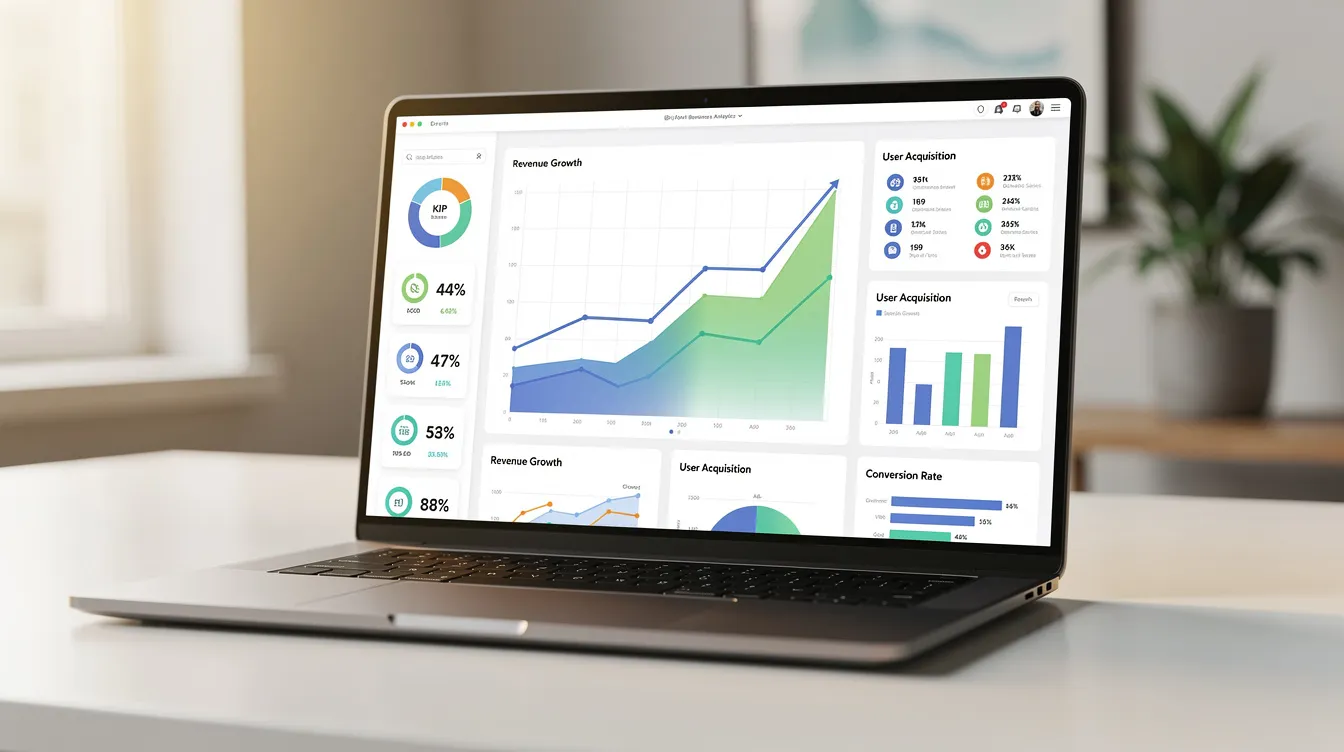
This traction slide should include:
-
12–18 months of ARR growth chart
-
Logo count growth
-
Key SaaS metrics: NRR (target 115-120%), gross margin (75-85%), churn (under 5% annual)
Traction for a business can be validated through metrics such as revenue figures, user growth, and high-quality testimonials. Visual proof, such as retention rates, customer retention statistics, or unit economics, can help build trust in a business proposal.
Coaching notes: Explain which benchmarks VCs look for at each stage. Per OpenView Partners’ 2025 benchmarks, seed-stage companies should show 2-3x YoY growth, while Series A expects 3-5x.
Slide 8 – Unit Economics & Payback
Present a table or simple chart:
|
Metric |
Your Number |
Benchmark |
|---|---|---|
|
CAC |
$20K |
Varies by segment |
|
LTV |
$150K |
3:1 LTV:CAC minimum |
|
CAC Payback |
9 months |
Under 12 months for seed |
|
Contribution Margin |
65% |
60%+ is healthy |
Coaching notes: Show how to adjust for different contract lengths and sales cycles. If your payback is 30 months, frame it as “path to 12 months via PLG” with realistic assumptions.
Slide 9 – Customers & User Engagement
Display:
-
Logos of 5–10 real customers
-
Engagement metrics: DAU/MAU (e.g., 40%), feature adoption rates
Coaching notes: Explain how to avoid vanity metrics and highlight real user behavior. Sign-ups without activation don’t belong here.
Slide 10 – Competition & Positioning
Use a 2x2 matrix or feature matrix comparing against 3–5 named competitors. Your competition slide should position you honestly within the competitive landscape.
Coaching notes: Teach how to pick honest axes. Avoid oversimplified “we’re the only ones” claims—investors see right through them.
Slide 11 – Go-to-Market & Sales Engine
Outline your go to market strategy:
-
Channels: direct sales, PLG (product-led growth), partnerships
-
Sales funnel metrics and conversion rates
-
2026–2028 pipeline goals (e.g., $10M pipeline)
Coaching notes: Help translate sales ops data into a compelling story for potential investors.
Slide 12 – Team & Journey
Your team slide should include:
-
Photos of core team members
-
Prior exits and relevant experience
-
Domain expertise that matters
Highlighting the expertise of the founding team is crucial for establishing credibility and capability in a business plan. Investors in 2026 care about founder-market fit and whether you’ve shipped products before.
Coaching notes: Explain what early-stage investors actually want to see—execution ability over impressive titles.
Slide 13 – Forecasts & Use of Funds
Specify a 3-year forecast:
-
ARR trajectory (e.g., $2M to $20M by 2029)
-
EBITDA path
-
Headcount growth
-
Use of funds pie chart tied to milestones
Coaching notes: Explain how to avoid unrealistic “straight-line” projections. Show you understand capital efficiency matters in 2026.
Slide 14 – Vision & Closing
End with a “2029 vision” graphic and a simple call-to-action. Frame it to create a lasting impression that links back to your slide 2 summary.
Coaching notes: Suggest framing that creates narrative closure.
Our SaaS Pitch Deck Template includes coaching notes on every slide and editable graphs in Canva and PowerPoint—over 35 metrics ready for you to customize.
Pitch Deck Example #2: eCommerce & Marketplaces (Two-Sided Platforms)
This section adapts lessons from decks like Airbnb, Uber, DoorDash, and Dutchie into our own marketplace pitch presentation structure, designed for two-sided platforms funded between 2013–2024.
Slide 1 – Marketplace Cover Story
Use imagery that clearly shows both sides of the market—restaurants and diners, sellers and buyers, hosts and guests.
Coaching notes: Explain how to craft a one-sentence pitch that references both sides of your marketplace.
Slide 2 – Problem (Both Sides Of The Market)
Split the slide visually between supply pain and demand pain with concrete stats:
|
Side |
Pain Point |
Stat |
|---|---|---|
|
Supply |
Unutilized capacity |
40% average |
|
Demand |
Long wait times |
2+ hours average |
Airbnb positions itself as a cost-effective alternative to hotels, which are often 2-3 times more expensive and disconnect travelers from local culture. This dual-pain framing captured both host and guest perspectives.
Coaching notes: Help prevent overloading with text. Keeping slides simple with one main idea and under 30 words can enhance the effectiveness of presentations.
Slide 3 – Solution & Platform Overview
Use a simple 3-step diagram:
-
Discover (browse/search)
-
Book (match/purchase)
-
Pay (transaction/fulfillment)
YouTube’s pitch deck from 2005 was straightforward and concise, helping the company raise $3.5 million in its Series A round by clearly presenting its value proposition and market potential. Simplicity wins.
Coaching notes: Describe how to tell the story without deep technical detail.
Slide 4 – Business & Revenue Model
Detail your marketplace mechanics:
-
Take-rate (e.g., 15% on each transaction)
-
Subscription tiers for power users
-
Ancillary revenue: ads, SaaS add-ons
Airbnb’s business model involves a commission of 10% on every transaction—a clear, simple revenue model that investors immediately understood.
Coaching notes: Cover how investors think about take-rate vs GMV and why revenue recognition matters.
Slide 5 – Liquidity & Network Effects
Add metrics that demonstrate marketplace health:
-
Match rate (target 70%+)
-
Time-to-first-transaction (under 7 days)
-
Repeat purchase rate (30-day target: 40%)
Coaching notes: Define “liquidity” for first-time founders and show how to choose 2–3 key marketplace metrics that matter most.
Slide 6 – Market Size & Category Tailwinds
Present:
-
2026–2030 forecast data for your vertical
-
Market trends or technological shifts that provide compelling reasons for why your business exists immediately
-
Regulatory tailwinds (e.g., cannabis legalization, gig economy regulations)
Coaching notes: Explain how to avoid weak “everything market” TAMs. Market analysis should be specific to your target audience.
Slide 7 – Traction: GMV & Cohorts
Show:
-
GMV growth by quarter
-
Active buyers/sellers count
-
Basic cohort chart showing retention over time
Tinder’s original pitch deck, then called Matchbox, emphasized the common challenges of meeting new people and presented a simple solution through a mobile app, using playful visuals to engage the audience. Cohort data showing retention curves that bend upward signals growth potential.
Coaching notes: Teach how to interpret cohort behaviour and which curves investors want to see.
Slide 8 – Unit Economics Per Transaction
Create a simple per-order economics breakdown:
|
Metric |
Value |
|---|---|
|
AOV |
$80 |
|
Take-rate |
18% |
|
Variable cost |
$5 |
|
Contribution margin |
60% |
Coaching notes: Guide on using real data vs “target” unit economics and how to label them clearly.
Slide 9 – Supply Acquisition Strategy
Include concrete channel data:
-
Outbound sales to restaurants/merchants
-
Integration partnerships
-
2025–2026 CAC figures (e.g., $500 per supplier)
Coaching notes: Emphasise how to show scalability of supply growth—investors worry about chicken-and-egg dynamics.
Slide 10 – Demand Growth & Retention
Show acquisition channels and retention:
-
SEO, referrals, paid ads mix
-
30/90-day repeat rate (e.g., 35%)
-
Payback on paid marketing (e.g., 6 months)
Using visuals such as high-quality images, infographics, and charts can significantly enhance a pitch presentation by making complex information easier to understand and remember.
Coaching notes: Explain how to talk about payback on paid marketing honestly.
Slide 11 – Competitive Landscape
Map against incumbents and vertical specialists:
-
Major players (DoorDash, Deliveroo)
-
Niche competitors
-
Your competitive advantage clearly positioned
Not tailoring the pitch deck to the specific audience can lead to disengagement; it’s essential to understand what the investors care about and address those points directly.
Coaching notes: Help founders discuss competition without sounding defensive.
Slide 12 – Team & Advisors
Include domain-specific experience:
-
Ex-DoorDash ops, ex-Shopify PM
-
Relevant past projects and exits
-
Advisory board with credibility
Coaching notes: Show how to talk about advisors realistically—investors can smell inflated claims.
Slide 13 – Financial Forecasts & Funding Ask
Connect forecast GMV, revenue, and EBITDA to specific milestones:
-
GMV target: $200M by 2029
-
Path to EBITDA positive
-
Hiring and product milestones
Coaching notes: Give guidance on sensitivity analysis and what-if scenarios.
Our Ecommerce & Marketplaces Pitch Deck Template wraps this structure into 18 editable pages with coaching notes, graphs, and tables ready in Canva and PowerPoint.
Pitch Deck Example #3: Tech-Enabled Services & Agencies
This section focuses on software-enabled services, agencies, and consultancies—digital agencies, AI-powered service firms, and hybrid models—leveraging patterns from Crema, digital agencies, and services case studies between 2016–2025.
Slide 1 – Brand-Forward Cover
Emphasise visual brand elements:
-
Logo and brand colours
-
Hero image of real client work
-
Professional pitch deck positioning
Coaching notes: Explain why credibility and trust trump pure “product” language in services businesses.
Slide 2 – Mission & Who You Serve
Present a concise mission statement plus 3–4 client segments:
-
Mid-market retailers ($10-50M revenue)
-
Healthcare providers
-
FinTech startups
Coaching notes: Show how to avoid vague “we serve everyone” messaging. Be specific about your target market.
Slide 3 – Problem & Market Need
Detail 2–3 operational or strategic problems:
-
High digital CAC (15-20% of revenue per Forrester 2025)
-
Slow product delivery cycles
-
Lack of technical expertise in-house
Coaching notes: Help sharpen language around measurable pain for potential clients.
Slide 4 – Service Offering & Delivery Model
Use a simple process diagram:
-
Discover
-
Design
-
Build
-
Optimize
Include concrete packages: retainers ($20K/month), project fees, usage-based options.
Coaching notes: Explain how to link services to measurable outcomes clients care about.
Slide 5 – Revenue Model & Recurring Components
Distinguish between:
-
One-off projects (40% of revenue)
-
Retainers (60% of revenue)
-
Productized services (monthly AI monitoring, CRO experiments)
Coaching notes: Help founders show predictability to investors—recurring services revenue is more valuable.
Slide 6 – Case Studies & Outcomes
Present 2–3 miniature case snapshots:
-
“2024: Increased ecommerce conversion rate by 38% for AU fashion brand”
-
“2025: Reduced customer acquisition cost by 45% for fintech business model client”
Coaching notes: Teach how to pick metrics that matter (margin impact, ARR uplift, not vanity stats).
Slide 7 – Market Size & Positioning
Show:
-
2026 global or regional services market size
-
Your specific niche (e.g., Shopify-focused CRO agencies in APAC, $50B market)
Services trade at 4-6x EBITDA compared to SaaS at 10x+, but hybrid models with 20-30% software revenue can boost valuations 2-3x.
Coaching notes: Clarify how investors view services vs product multiples.

Slide 8 – Operational Metrics
Include:
-
Utilization rate (target 75%)
-
Average project margin (40%+)
-
Client concentration risk
-
NRR on retainers (110%+)
Coaching notes: Explain how investors read these metrics and what “good” looks like for services.
Slide 9 – Go-to-Market & Pipeline
Describe:
-
Referral loops (often primary channel)
-
Content marketing and social media management platform presence
-
Outbound and partnerships
-
Quantified 6–12 month pipeline (e.g., $5M)
Coaching notes: Guide on linking marketing activities to measurable pipeline growth.
Slide 10 – Team & Delivery Capacity
Outline:
-
Core leadership team
-
Delivery composition (designers, engineers, growth specialists)
-
Scalability mechanisms (offshore pods, playbooks)
Coaching notes: Show how to address scalability concerns that make investors nervous about services businesses.
Slide 11 – Productisation & Long-Term Vision
Show how today’s services evolve into:
-
Repeatable frameworks
-
Software products
-
Path from services margins to software-like multiples
Coaching notes: Help communicate a credible path that excites investors about long-term growth potential.
Our Services Pitch Deck Template provides this exact structure with editable layouts and slide-by-slide coaching in both Canva and PowerPoint.
What Makes Our Pitch Deck Examples Different: Coaching Notes On Every Slide
Unlike many “Airbnb clone” templates—we’ve analysed 100+ Canva, Figma, and Slidebean templates that lack stage-specific guidance—our decks include comprehensive coaching notes on every slide, written specifically for first-time founders.
What the coaching notes include:
-
Metric framing guidance: For example, “If your CAC payback is 30 months at seed, here’s how to frame it honestly and still build a compelling narrative—compare with companies like Aircall who showed a clear path to improvement.”
-
Stage-specific advice: Notes help you decide which slides to keep or drop. Pre-launch founders should focus on team and problem validation. Growth-stage companies need detailed unit economics and cohort data.
-
2024–2026 investor expectations: Updated guidance reflecting the shift toward efficient growth rather than “growth at all costs.” VCs now want burn multiples under 2x ARR growth.
-
Visually appealing but not overcrowded: One common mistake in pitch decks is overloading slides with text, which can overwhelm the audience and detract from the key messages being communicated. Our notes remind you to keep key points concise.
Founders typically select 12–15 slides from the 18-page master deck. The coaching helps you make those decisions based on your actual data quality and stage—not guesswork.
All decks are available in Canva and PowerPoint, with graphs and tables fully editable using your brand kit. Just plug in your real numbers.
Beyond The Pitch Deck Example: Investment Memorandum Templates
Formal investment memorandums (IMs) complement slide decks when potential investors need deeper due diligence documentation.
The IM goes deeper into:
-
Historical financials and cap table
-
Legal structure and entity details
-
Market analysis with cited sources
-
Risk factors and mitigations
Our Investment Memorandum Templates are structured to align with the same narrative as the pitch deck examples, so investors see a consistent story across both documents.
Many founders in 2026 now send a short 12–15 slide deck plus a 15–25 page memorandum when raising, especially for larger seed and Series A rounds. Per PitchBook data, approximately 60% of 2025 seed and Series A rounds involved formal memorandums alongside the initial pitch presentation.
How To Use These Pitch Deck Examples Step-By-Step
Here’s how to go from blank page to investor-ready deck using our templates.
Step 1 – Pick The Right Model
Choose between SaaS, ecommerce/marketplace, or services template based on your true revenue model:
-
Recurring subscriptions → SaaS template
-
Transaction-based with two sides → Marketplace template
-
Service revenue with productization path → Services template
Step 2 – Draft Story In Plain Text
Write each slide’s key message in a document before opening Canva or PowerPoint. Use our coaching prompts as questions to answer. This creates a compelling story before you touch design.
Step 3 – Select 12–15 Slides
Start from the full 18 pages and remove redundant or premature slides. A pitch deck should ideally consist of 10-15 slides to keep the presentation concise and focused, allowing investors to grasp the key points quickly. The 10/20/30 Rule suggests aiming for 10 slides in a presentation, a 20-minute duration, and a minimum font size of 30 points to maintain clarity.
Step 4 – Insert Real Metrics
Plug in actual historical data up to your latest full month or quarter (e.g., Q1 2026). Label projections clearly as forward-looking. Never use hypothetical numbers without marking them—investors will catch you.
Step 5 – Iterate With Investors & Mentors
It’s important to practice your pitch multiple times to become comfortable with the flow and timing, which helps in delivering the message more naturally and effectively. Update based on feedback, especially on confusing slides and overcrowded charts.
Step 6 – Create Email & Live Versions
-
Email version: Needs more annotations and concise bullet points since you won’t be there to explain
-
Live pitch version: More visual, fewer words, relies on your verbal narrative
Both can be derived from the same template with minor adjustments.

FAQ
How many slides should my investor pitch deck have in 2026?
Most early-stage investors still prefer 10–15 core slides, even though our templates provide 18 options to choose from. Including every possible slide usually hurts clarity rather than helping.
Founders should prioritise the 12–15 slides that best demonstrate:
-
Problem and solution fit
-
Market opportunity
-
Traction and metrics
-
Unit economics
-
Team credibility
-
Funding ask and use of funds
Extra detailed metrics, cap table summaries, or legal information can live in an appendix or separate investment memorandum. Don’t let your second slide compete with your most successful startups data—prioritize ruthlessly.
Which metrics are absolutely essential in a recurring-revenue (SaaS) pitch deck?
For any SaaS or subscription business, investors expect to see these core must-have metrics:
-
Current ARR or MRR
-
YoY or MoM growth rate
-
Gross margin (target 75-85%)
-
Logo/customer count
-
Churn and retention rates
-
CAC and CAC payback period (under 12 months for seed)
-
LTV:CAC ratio (minimum 3:1)
Our SaaS pitch deck template includes over 35 suggested metrics, but coaching notes help you pick 8–12 that match your stage and data quality. Remember: vanity metrics like raw sign-ups without activation shouldn’t dominate your traction story.
Can I use a SaaS pitch deck example if my tech startup also has services revenue?
Many modern companies are “hybrids” combining software subscriptions with onboarding, consulting, or implementation services. You can still anchor your story on recurring revenue if subscriptions are the long-term core of your own business.
Suggestions for hybrid models:
-
Use the SaaS template as your base if subscriptions will be 60%+ of revenue
-
Borrow 1–2 slides from the services structure to explain implementation or custom work
-
Clearly separate recurring vs one-time revenue in your business strategy
Coaching notes in both templates provide specific guidance on how to present mixed revenue streams clearly without confusing investors.
Do I really need an investment memorandum, or is a pitch deck enough?
For small pre-seed rounds from friends, family, and angels, a strong 12–15 slide deck is often sufficient to attract potential investors and secure funding.
However, for larger seed and Series A rounds in 2026, most lead investors will eventually ask for a deeper written document. The memorandum should include:
-
Full historical financials
-
Detailed market analysis
-
Risk disclosure
-
Legal and cap table details
Our investment memorandum templates are designed to extend your pitch deck story into that longer form without re-inventing the structure. You can create a pitch deck first, then expand it into the memorandum when investor’s attention moves to diligence.
What formats do your pitch deck examples and templates come in?
All decks are available in both Canva and PowerPoint formats with:
-
Text fully editable
-
Charts and graphs with sample data you can replace
-
Tables ready for your metrics
-
Coaching notes visible in the editor for guidance
Google Slides versions can be created easily by importing the PowerPoint files into Google Drive. The customizable templates work for any brand—just update colours, fonts, and logos to match your brand kit.
Every single slide includes coaching notes guiding you on what to write, what metrics to include, and how to present information in a way that compels investors to take the next step.
Building a great pitch deck in 2026 requires more than visually appealing slides—it demands the right structure, metrics, and narrative for your specific technology business model. Whether you’re building a SaaS platform, marketplace, or tech-enabled services company, start with a proven structure and adapt it to your unique strengths.
Ready to create a pitch deck that captures investor’s attention? Browse our templates for SaaS, eCommerce/Marketplaces, Services, or get the complete investment memorandum to support your raise.


